Composting is the controlled act of decomposing organic matter to create crumbly, brown, earthy-smelling, nutrient-rich, soil amendment.
The City of Durham encourages home composting and is currently investigating the best options for providing curbside collection for Solid Waste customers.
Compost Bin SaleTo help you get started on your composting journey, we want to share with you the chance to purchase a bin and get started on this this eco-friendly endeavor. Together, let's make a positive impact on our city, one compost bin at a time!
The 2024 compost bin sale is open throughout March. So get your orders in by March 31, and your compost bins will be available for pickup the week of May 6.
Compost BenefitsComposting saves communities money by reducing waste collection and disposal costs, and associated impacts such as methane and leachate production in landfills. Composting instead returns organic resources to the soil. Using compost in soils can eliminate the need for conventional chemical fertilizers by improving overall soil quality and structure, and creating a natural, healthy, soil ecology. Soils fed with compost retain moisture better and are less prone to erosion, which further protects our waterways. Individuals and households can compost at home using a variety of containers and methods, or subscribe to a commercial compost collection for a fee.
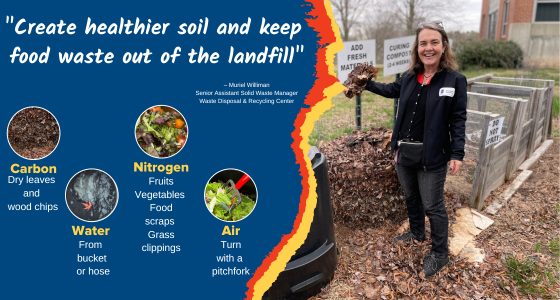
Compost piles are chemically and biologically living systems. However, composting is not complicated! There are only four ingredients to a basic compost recipe:
Mix 50/50 by volume vegetable and fruit wastes, coffee grounds, grass clippings, herbivore manures (aka “greens”) and leaves, straw, wood chips (aka “browns”).
Always bury fresh food scraps inside the compost pile or cover with a layer of carbon. Exposed food will attract flies.
Turn compost occasionally with a pitchfork to maintain aeration. Use a garden hose or rainwater to maintain moisture balance so that it is as moist as a wrung out sponge.
During the composting process, the volume of the materials will decrease to a quarter their original volume. Materials breaking down in a compost pile can reach temperatures of 130 degrees F, or more.
Do not compost meat, bones, dairy products, breads, dog or cat feces, treated wood, or diseased plants in a home composter. It will smell bad, may attract vermin, and/or impact the quality of the finished compost.
Finished compost should be cool to the touch, dark brown and slightly moist with an earthy aroma. If it looks like dirt, and smells like dirt… it’s probably dirt.
Compost Troubleshooting GuideSymptoms
Problems
Solutions
Pile not composting
Too Dry Too many brown materials
Turn pile and add water until visibly damp throughout. Add fresh green material, water and turn pile.
Pile smells rotten attracts flies
Too much green material (food or grass clippings) Food scraps exposed Material not compostable
Turn pile and add brown material. Bury and mix food into pile. Remove meat and dairy and turn pile.
Rodents or other pests
Food scraps are exposed. Meat, bones, or dairy are in the compost.
Cover food waste thoroughly. Compost fruit, veggie, and other vegetative wastes only. Maintain balance of carbon and nitrogen, turn more often, and keep moist.
Compost Bins & MethodsThere are a variety of methods for composting your organic wastes. All methods will produce compost but some will compost more quickly than others, produce compost with a higher quality, or be easier to harvest.
Open Piles: Open piles are inexpensive and great for yard trimmings. Exposed food can attract animals, and pile can dry out easily. Hard to harvest fresh compost at the bottom of the pile.
Pallet bins: Inexpensive. More tidy and condensed than open piles. Add bays for turning and storing cured compost.
Commercial Bins: Many styles to choose from. Can be more costly, but are generally most effective in producing great compost from household vegetative wastes. Most stationary systems allow for harvesting finished compost while adding fresh material, and are good for passive (less turning) or active (more turning) composting. Turning or tumbling units make it easier to stir, but are separated from the ground which reduces the availability to decomposers in the soil. It can be harder to harvest finished compost in a tumbler unit because they will mix raw material with finished compost.
More Information (Books & Training)- The Complete Composting Guide- 2008, Deborah L. Martin and Barbara Pleasant, Storey Publishing
- Let it Rot 1975 - Stu Campbell, Garden Way Publishing
- Rodale Guide to Composting - 1979. Organic Gardening Staff, Rodale Press
- Worms Eat My Garbage - 1982. Mary Appelhof , Flower Press